
If you have lived in Southwest Missouri for any length of time, you already know that November is when deer start showing up in places you did not expect them. Peak rut season runs from late October through early December, and during that window deer are moving more, moving faster, and paying a lot less attention to oncoming traffic than usual. Missouri consistently ranks in the top half of states for deer-vehicle collisions, and most of them happen right here in the fall.
A deer strike is one of those things most drivers do not think about until it happens to them. By then the damage is already done, and whether you walk away with a dented bumper or a totaled vehicle usually comes down to a few seconds of decision-making and how well your vehicle was prepared to react.
Deer Move at Dawn, Dusk, and When You Least Expect It
The highest-risk times are the two hours after sunset and the two hours before sunrise. That is also when visibility is the worst, which is a tough combination. In November, sunset is happening right around 5 p.m., which puts the evening commute squarely in the danger zone for most Joplin drivers heading home from work.
Deer are also herd animals, so the one you just saw bolt across Route 43 or Highway 71 is almost never traveling alone. If one crosses in front of you, slow down and expect more. This is where good headlights really matter. If your low beams are hazy or your high beams are not working the way they should, now is the time to get them checked. We can replace burned-out bulbs, clean up foggy headlight lenses, and make sure your aim is where it should be so you are actually seeing the shoulder and not just the road right in front of you.
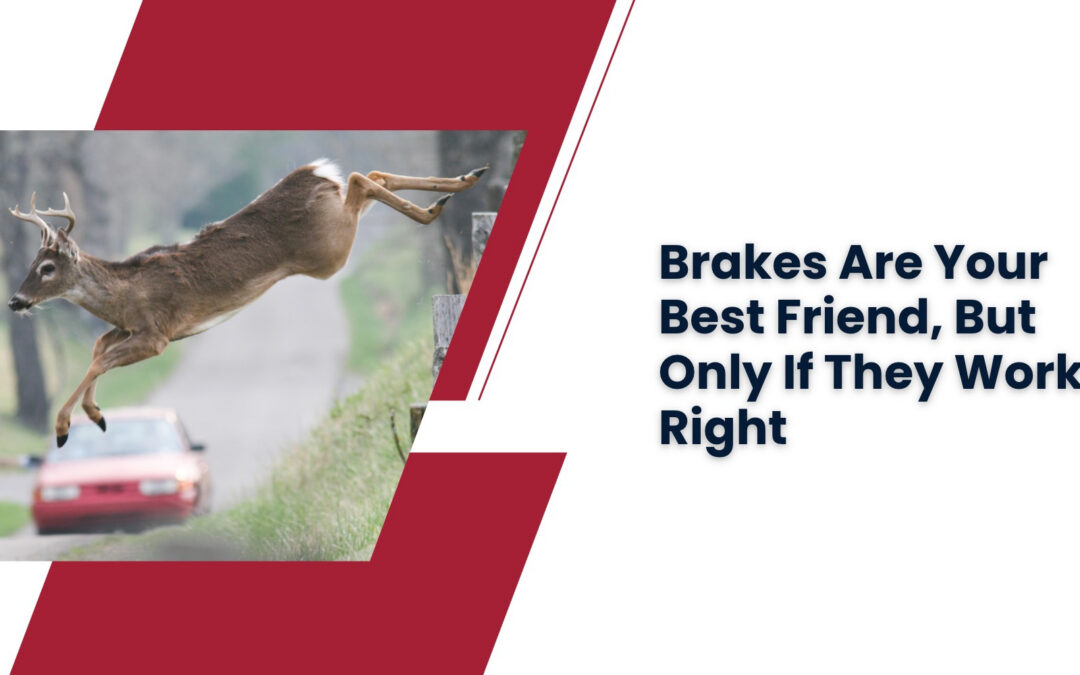
Brakes Are Your Best Friend, But Only If They Work Right
When a deer steps into your lane, your instinct is going to be to hit the brakes hard. That reaction can save your life, but only if your braking system is actually up to the job. Worn pads, glazed rotors, and tired brake fluid all add distance to how long it takes you to stop, and in a deer-strike situation that distance can be the difference between a clean stop and a totaled vehicle.
If you have been putting off a brake inspection, or if you have noticed any softness in the pedal, longer stopping distances, or vibration when you brake hard, get it looked at before the next close call. We offer free brake inspections and can turn rotors on our on-site brake lathe, which usually gets you back on the road same-day. Fresh brakes and tires with good tread give you your best shot at avoiding a deer entirely.
Don't Swerve, and Know What to Do Afterward
Driving instructors have been saying this for decades and it is still the right advice. If a deer steps out in front of you, brake hard and stay in your lane. Swerving is how people end up in ditches, head-on with another vehicle, or wrapped around a tree. A deer strike at 40 miles per hour is a bad day. A rollover trying to avoid one is often much worse.
If you do hit a deer, pull over safely and turn on your hazards. Do not approach the animal, especially if it is still moving. Call the Missouri State Highway Patrol or your local sheriff's department to report it, and take photos of the damage for your insurance claim. Even if your vehicle seems drivable, it is worth having it looked at. Deer strikes often cause hidden damage to radiators, cooling lines, headlight assemblies, and wiring that does not show itself until you are miles down the road.
Bring It By If You Have Any Doubts
Whether you are getting your vehicle ready for a Thanksgiving drive, dealing with a recent deer strike, or just want to make sure your headlights and brakes are in good shape before the darkest weeks of the year, our ASE-certified team can run through a full safety check in one visit. No appointment is needed, and free estimates mean you know exactly what your vehicle needs before any work gets done.
Stop by 102 N Main St in downtown Joplin or call us at (417) 627-0516. Stay alert out there, keep your eyes on the shoulder, and have a safe one this season.